


MVHR, explained without the jargon
Four letters that come up in every new-build conversation, and a system that is much easier to understand than its name suggests.
Modern homes are built airtight. That is deliberate: less draught, less wasted heat, lower bills. But air that cannot leak out cannot leak in either, and a home where the air never changes becomes stuffy, damp and eventually mouldy. Opening a window works, until winter, traffic noise or a ground-floor flat makes it impractical.
What the system actually does
MVHR (Mechanical Ventilation with Heat Recovery) is a quiet, continuous swap. Stale, moist air is drawn out of the kitchens and bathrooms; fresh, filtered air is delivered to the bedrooms and living rooms. The clever part happens in between: the two air streams pass through a heat exchanger, and the warmth of the outgoing air is handed over to the incoming air without the two ever mixing.
The result is a home constantly fed fresh air that arrives already warm. The heat that an ordinary extract fan blows into the street gets kept.
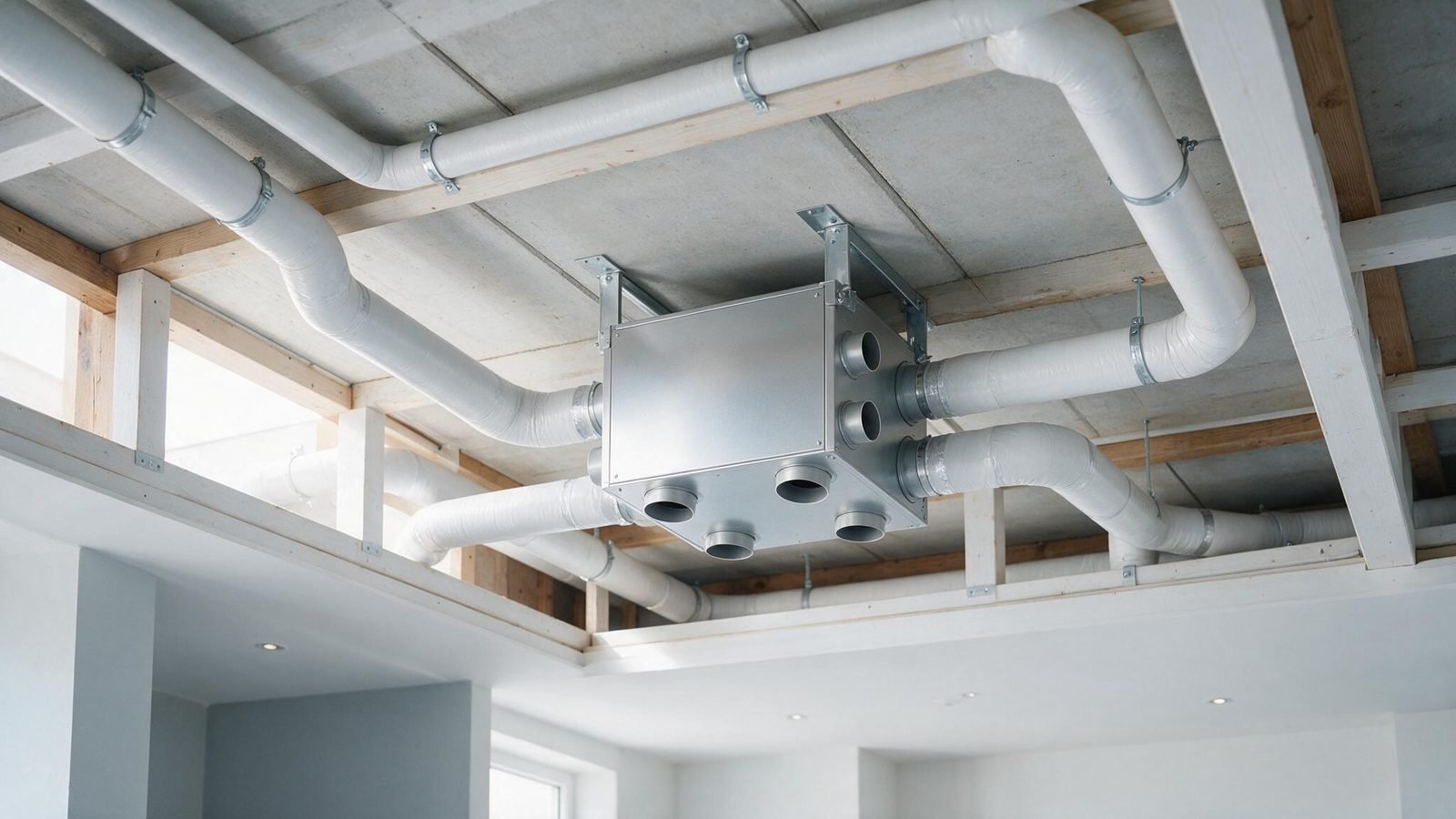
Why it suits new developments in particular
The tighter the building, the better MVHR performs, which is why it has become a natural fit for new residential developments. It deals with the moisture that airtight construction traps, it filters the incoming air (a genuine comfort near busy roads), and it does its work at a hum most residents never notice.
Where it goes wrong
MVHR is only as good as its design and its upkeep. Ducts sized wrong or runs planned as an afterthought will be noisy and underwhelming; filters never changed will slowly choke the system. The lesson: involve the ventilation contractor early, and keep them involved after handover.
Working on a development and weighing up MVHR? Ask us.